Who is Thibault Gonzales ? Spotlight on the 2025 Pâté-Croûte World Champion
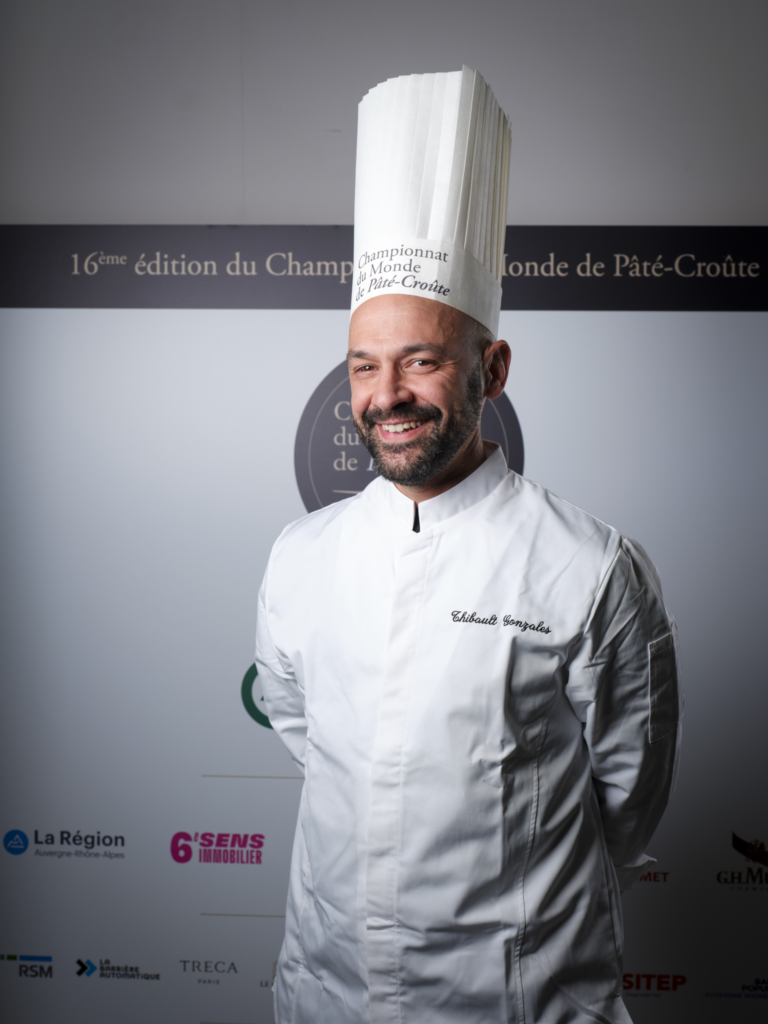
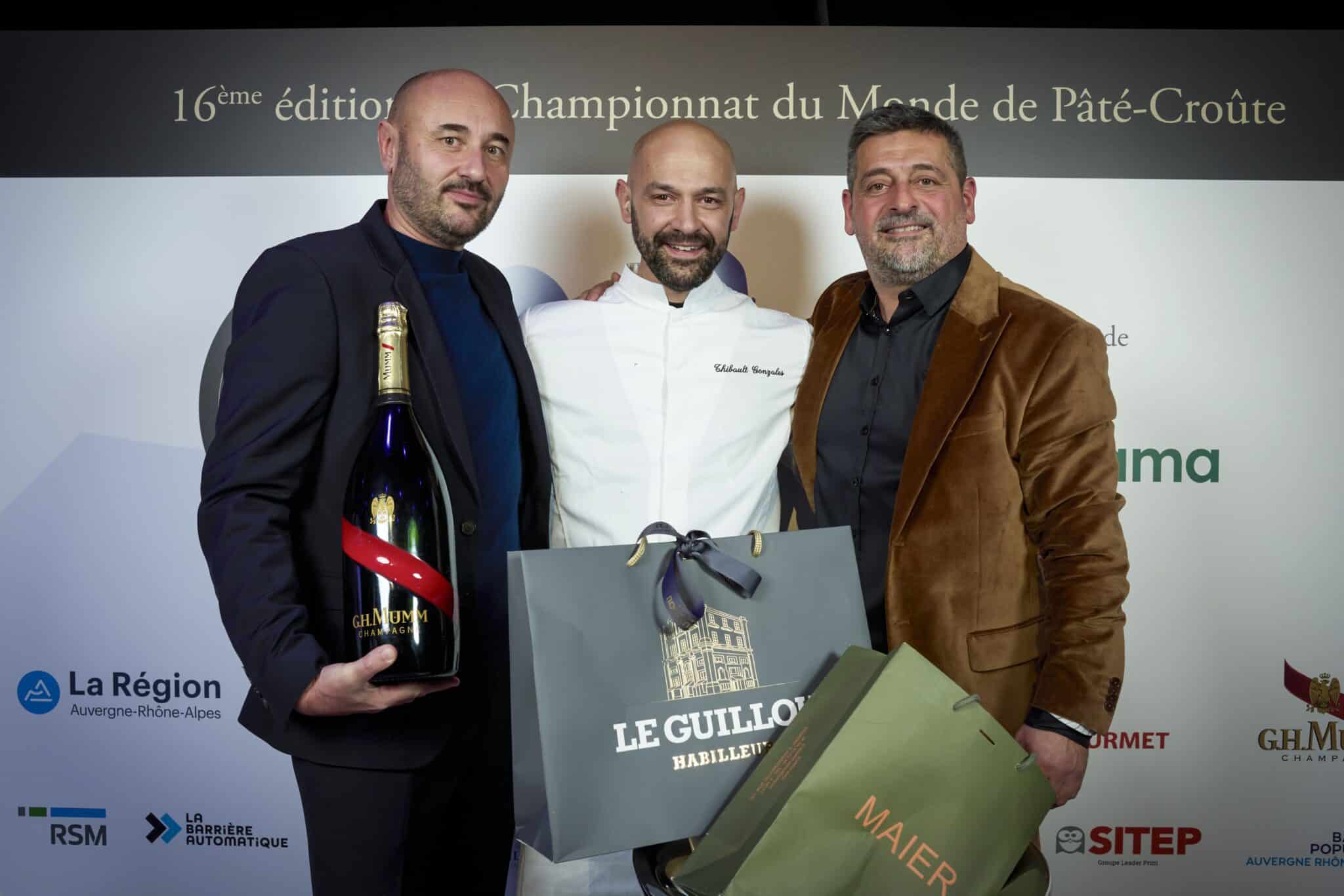
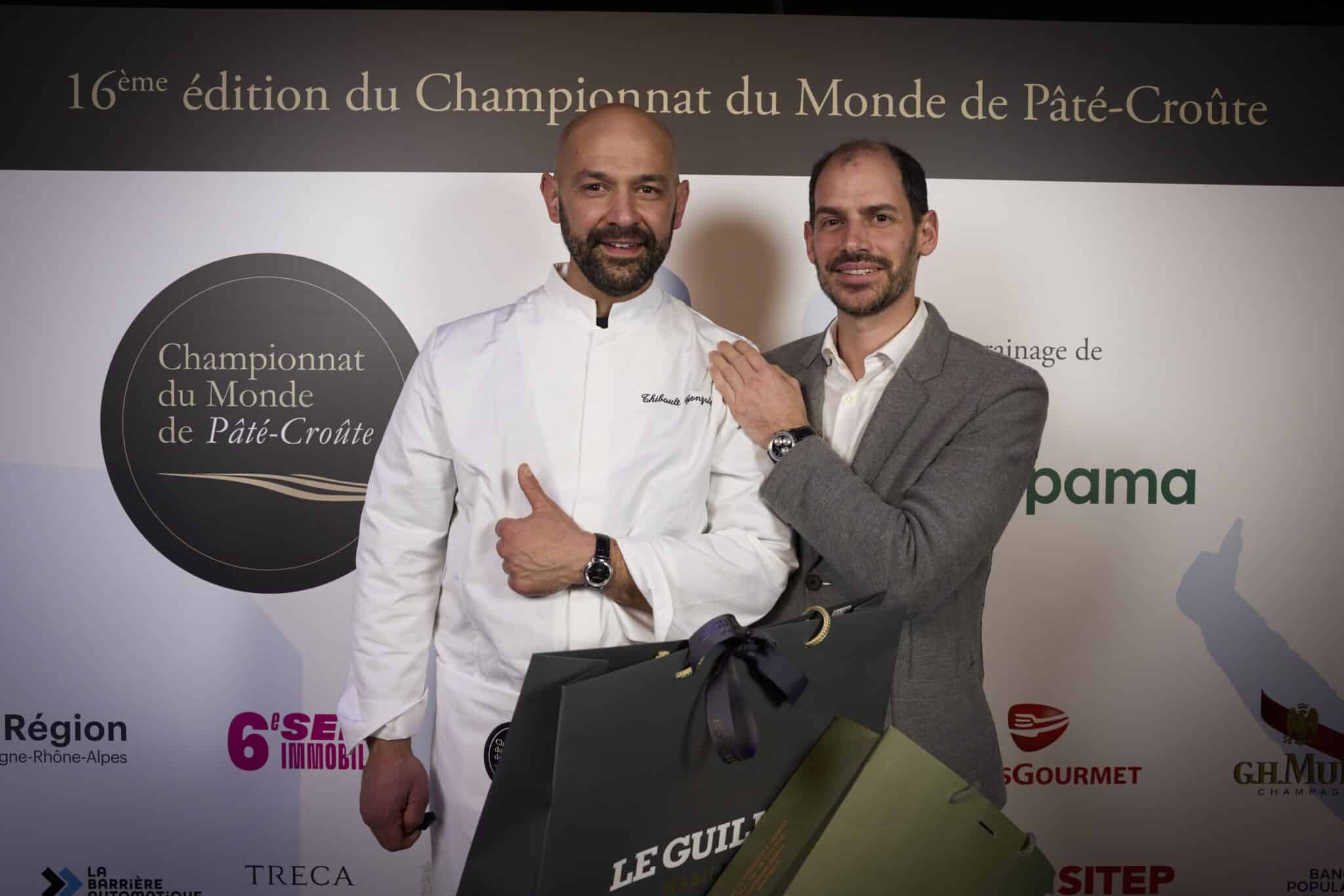
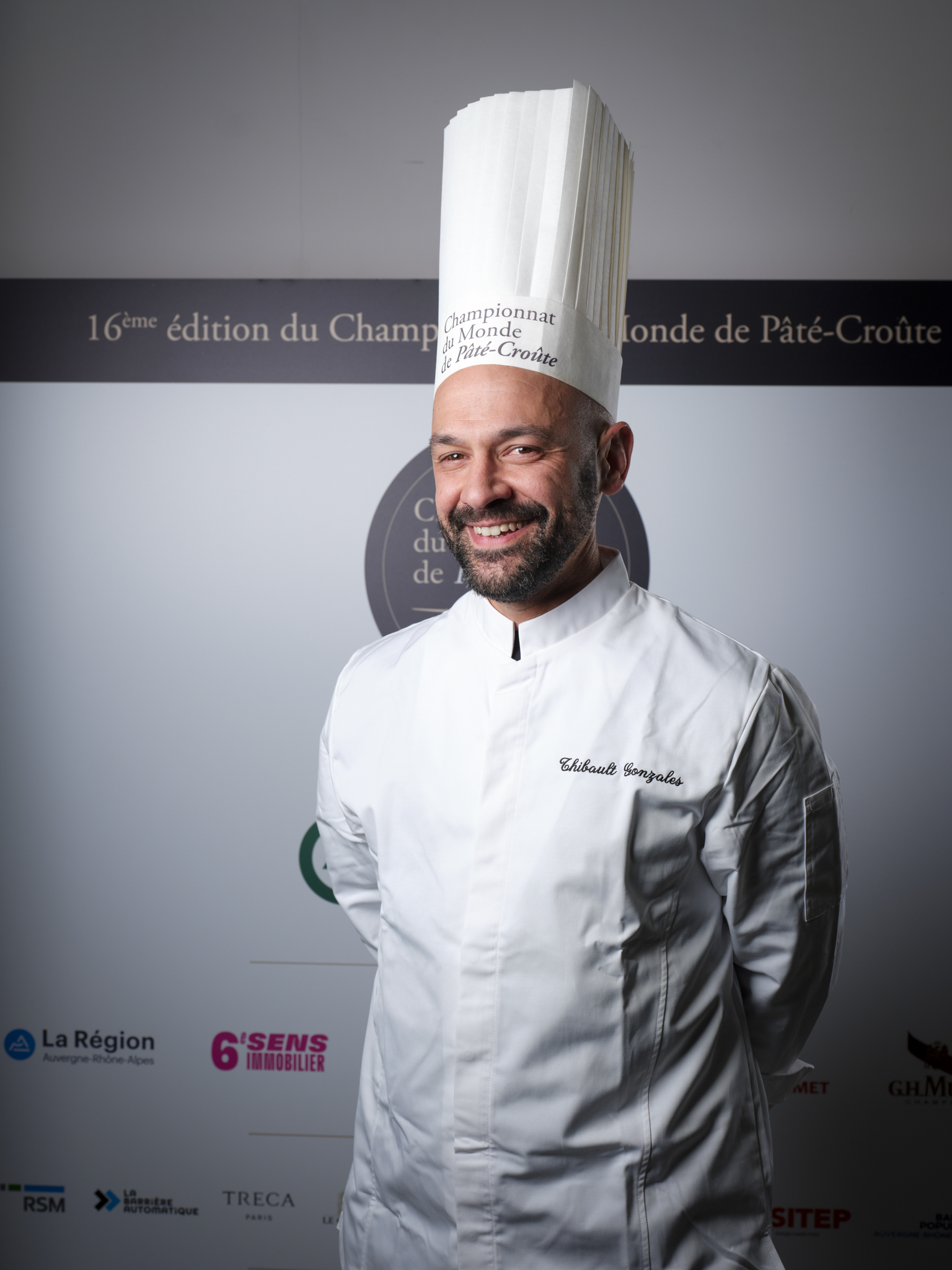
December 1, 2025 will remain a special date in the great history of our competition. That evening, beneath the vaults of La Sucrière in Lyon, emotion swept aside protocol. By crowning Thibault Gonzales, the jury did more than reward a technical feat; it celebrated a story of resilience, family, and terroir. An artisan charcutier in Thuir (Pyrénées-Orientales), the new pâté en croûte champion achieved a truly rare double by winning the World Champion title and the Confrérie Prize. Here is a detailed look back at the journey of a man who put “love” into his aspic.
The trophy’s return to a family “Maison”
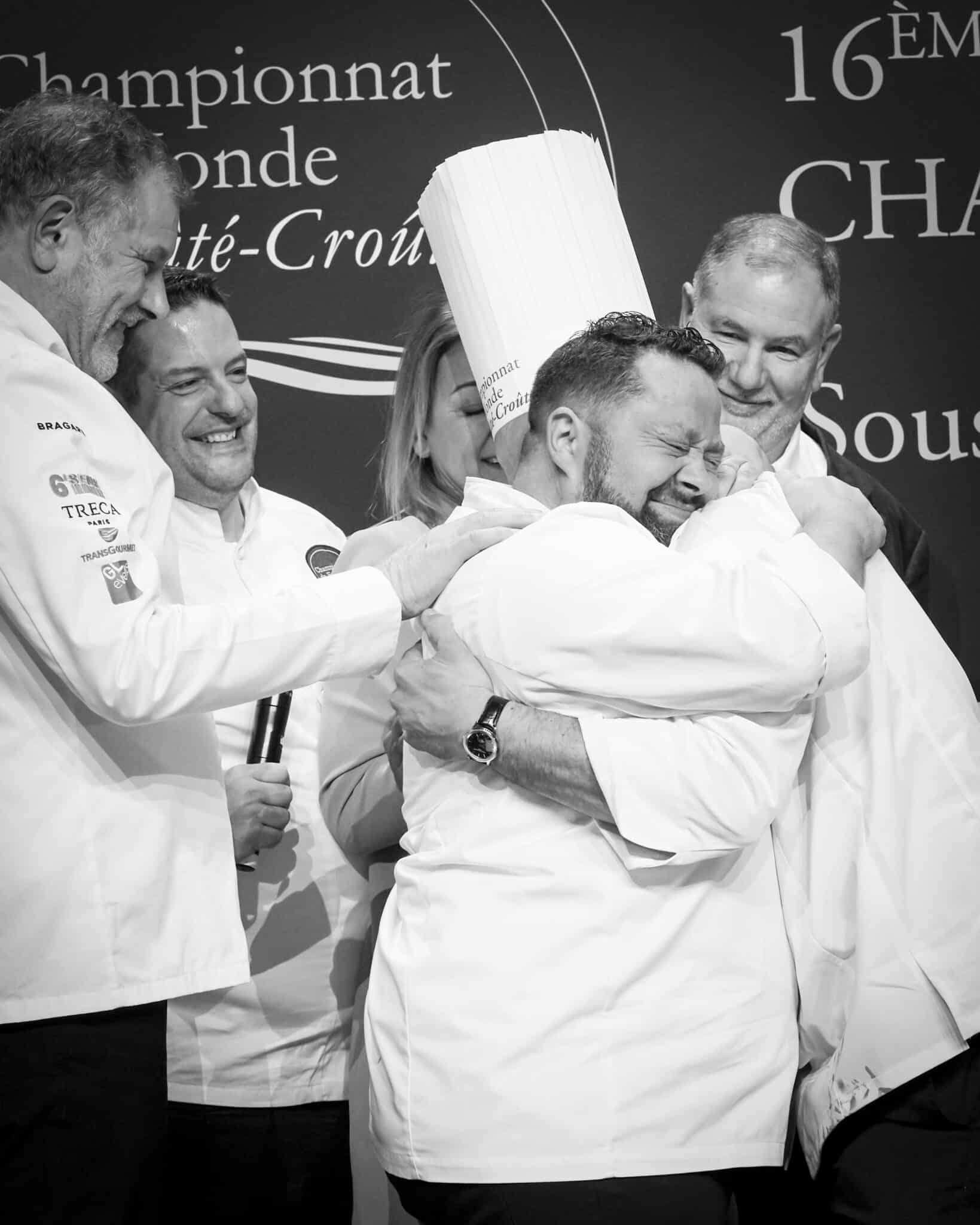
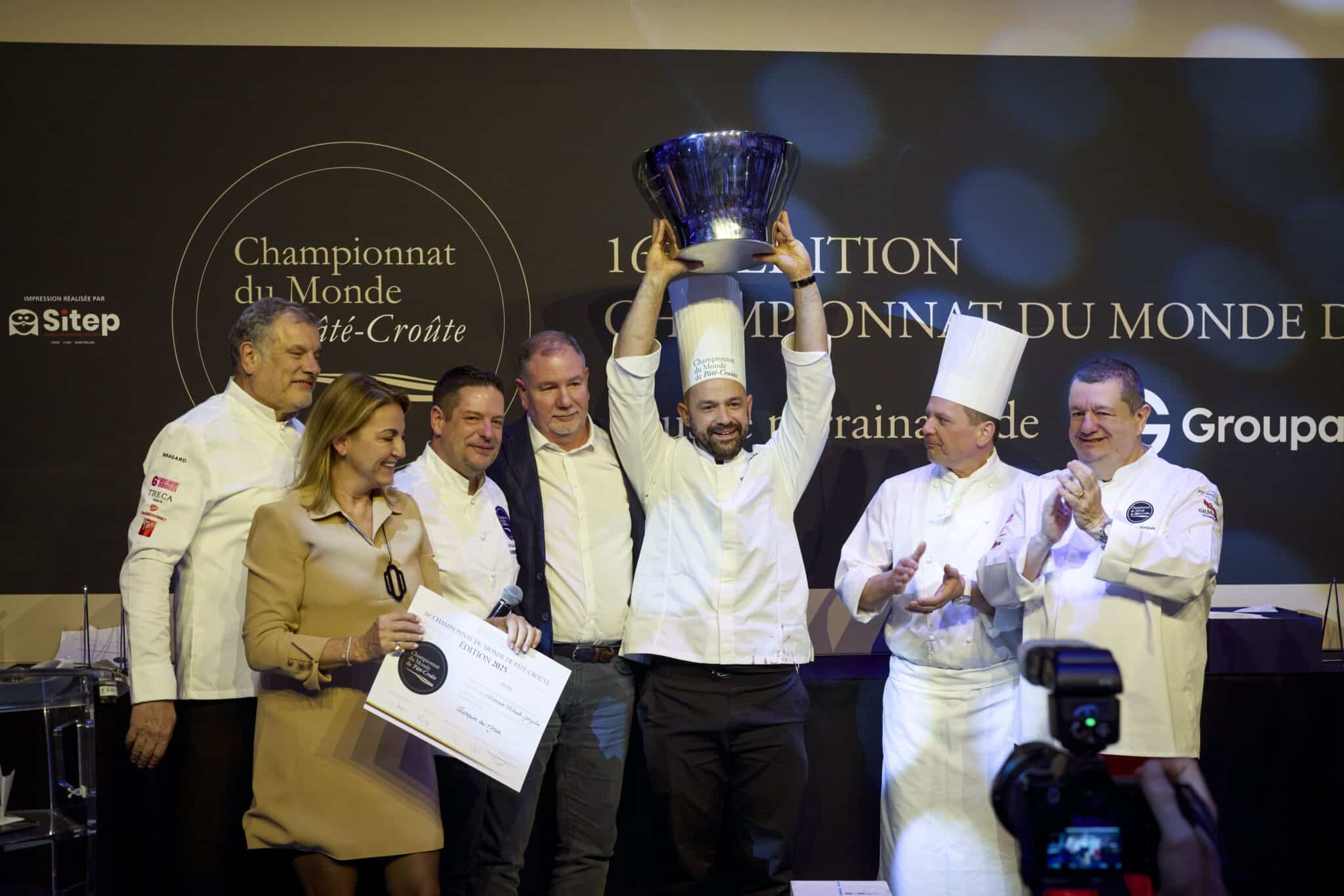
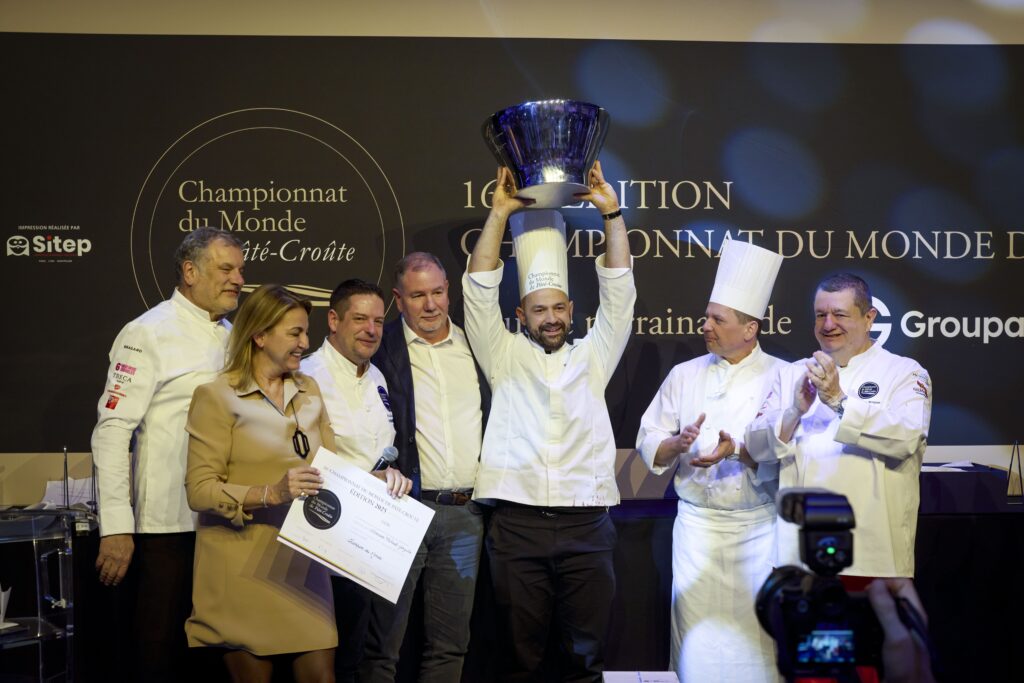
The image went viral on social media: Thibault Gonzales became Pâté-Croûte World Champion, with a tear in his eye as he lifted the trophy. This win has a special significance for the world of craftsmanship.
After several years marked by the excellence of Japanese chefs (with standout victories by Taiki Mano in 2024 and Ryutaro Shiomi in 2022, and the winning interlude of Frédéric Le Guen-Geffroy in 2023), the 2025 title returns to a neighborhood shop. Thibault Gonzales doesn’t lead a luxury-hotel brigade. He runs L’Espace Gourmand in Thuir, a human-sized, family-owned business.
Seeing “a small family house” win, as Arnaud Bernollin, the championship’s co-founder, noted with emotion, sends a powerful message: excellence isn’t a matter of resources, but of soul and rigor. It’s a victory for short supply chains, direct ties with customers, and know-how passed on day after day behind the butcher’s block.
1. Perseverance : From the 2023 setback to the ultimate triumph
To fully grasp the scale of this performance, we need to rewind the tape. In 2023, Thibault Gonzales had already stepped into the arena of the Pâté-Croûte World Championship. His run came to an abrupt stop in the semifinal of the France–Switzerland–Benelux selection (before it became the French Pâté-Croûte Championship). For many competitors, such a setback would have meant the end of their ambitions. For him, it was the start of the real climb.
In the interview he gave us, the champion looks back on that moment with clear-eyed honesty :
“I changed everything. I trained over the following two years, I did placements to improve. I wanted to understand what it takes to make an exceptional pâté en croûte.”
Far from clinging to his certainties, he took a student’s approach, breaking down the scoring criteria point by point: a crust that’s well baked without being dry, an aspic with the perfect texture, a powerful meat jus. Thibault didn’t just cook; he studied to understand exactly what the jury expected.
2. The springboard of the “French Championship”
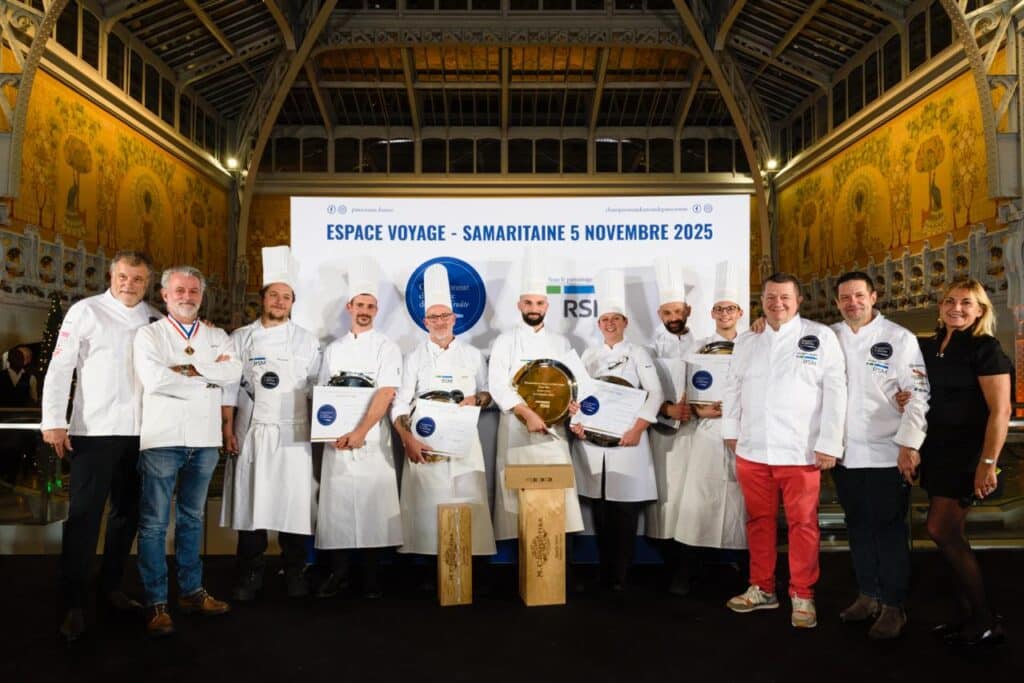
The 2025 edition introduced a major new feature in the organization: the French Pâté-Croûte Championship became a mandatory step for candidates from mainland France. Held at La Samaritaine in Paris last November, this stage added extra pressure.
Thibault Gonzales finished 4th there. Far from disappointing him, that ranking served as a final warm-up—a truly beneficial “crash test.”
“It allowed me to adapt for the final in Lyon and correct a few small mistakes,” he says.
He sees this new selection process as a way to raise the level even higher: “It helps select the candidates better, and it lets those who qualify improve and refine their recipe.” This ability to question himself until the very last minute—to tweak the seasoning between Paris and Lyon—is the hallmark of great champions.
3. The masterpiece : the “Vannier-style Pâté en Croûte”
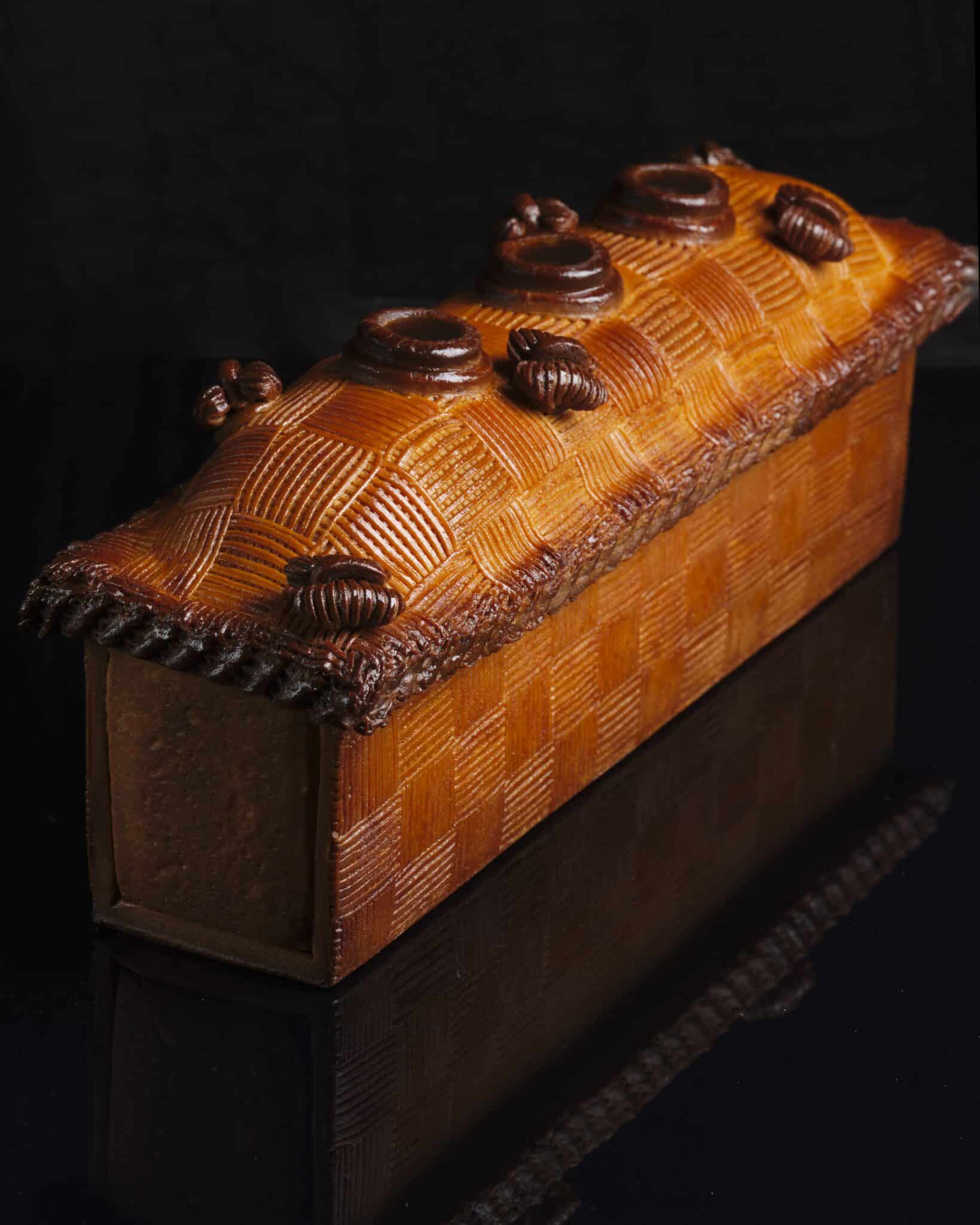
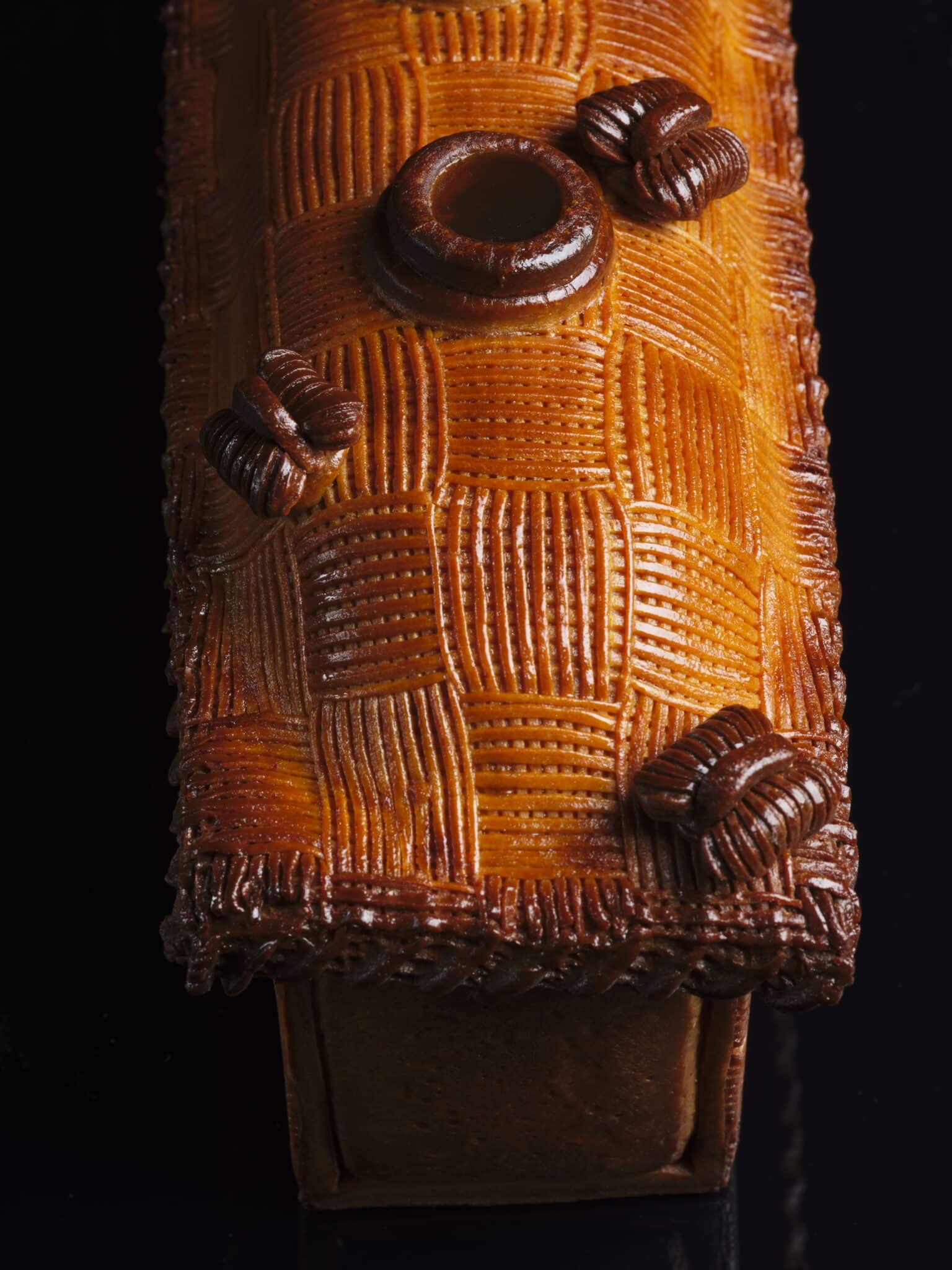
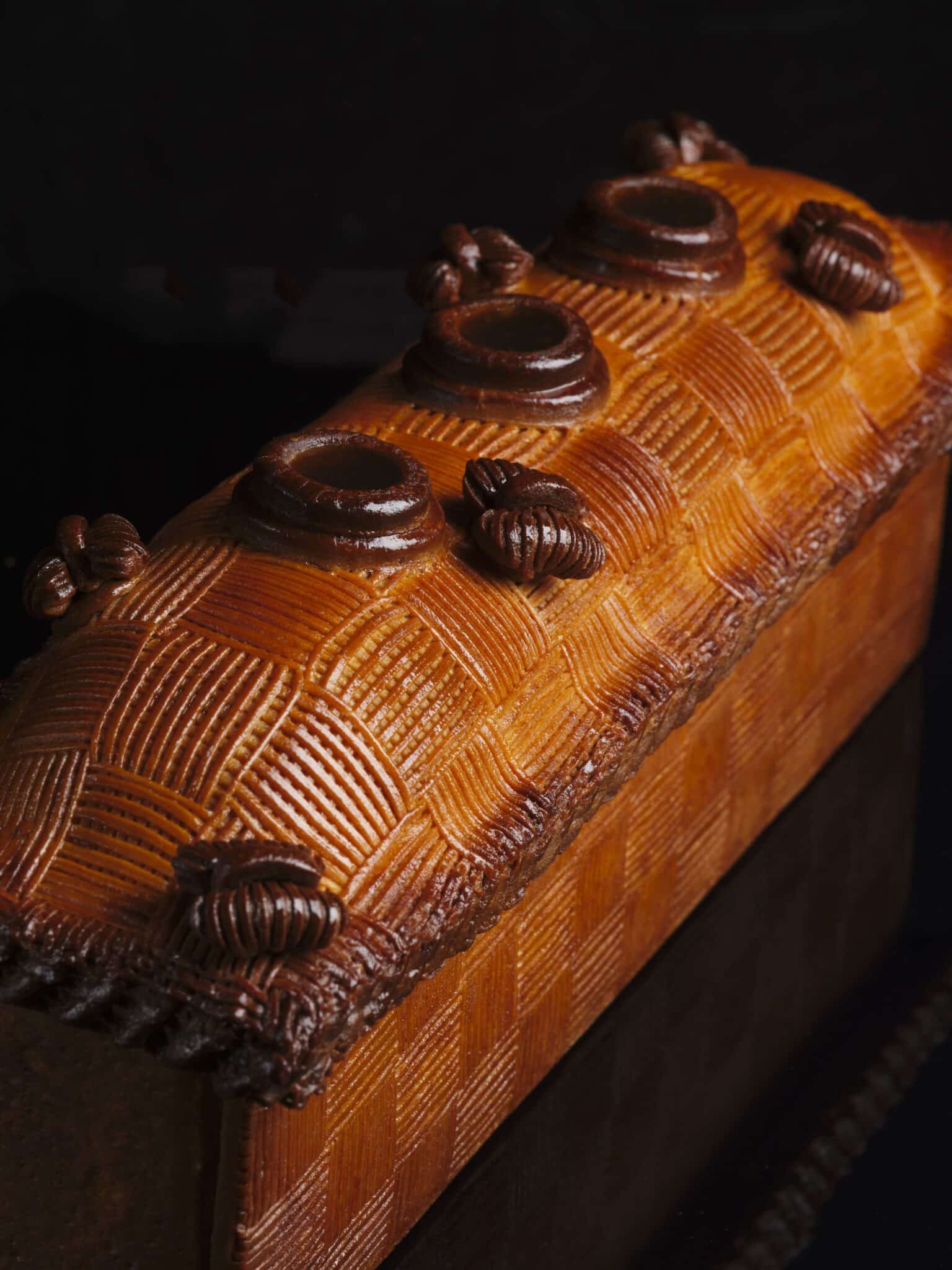
On the judges’ table—chaired this year by three-Michelin-star chef Franck Giovannini (Restaurant de l’Hôtel de Ville de Crissier)—it was the “Vannier-style Pâté en Croûte” that made the difference.
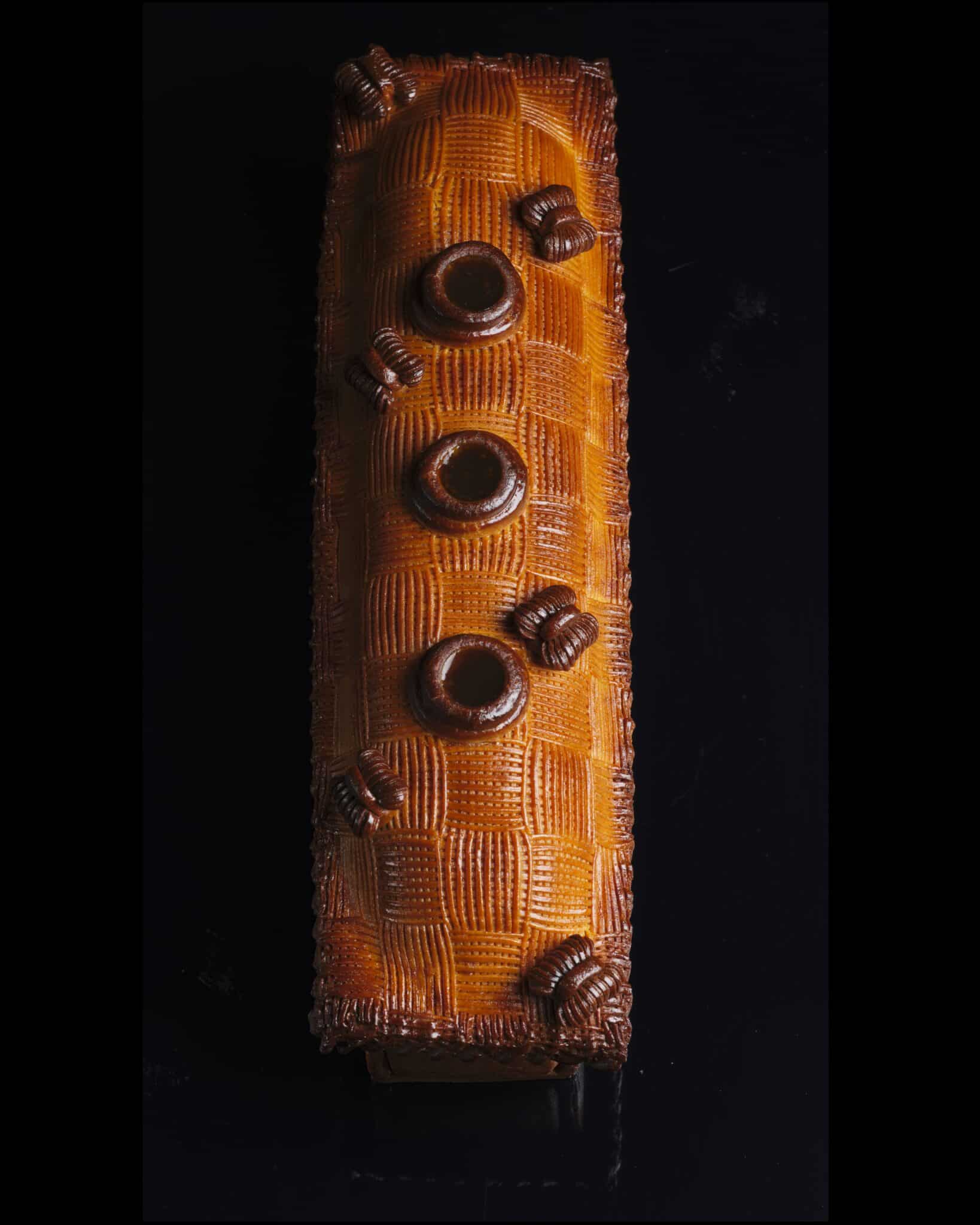
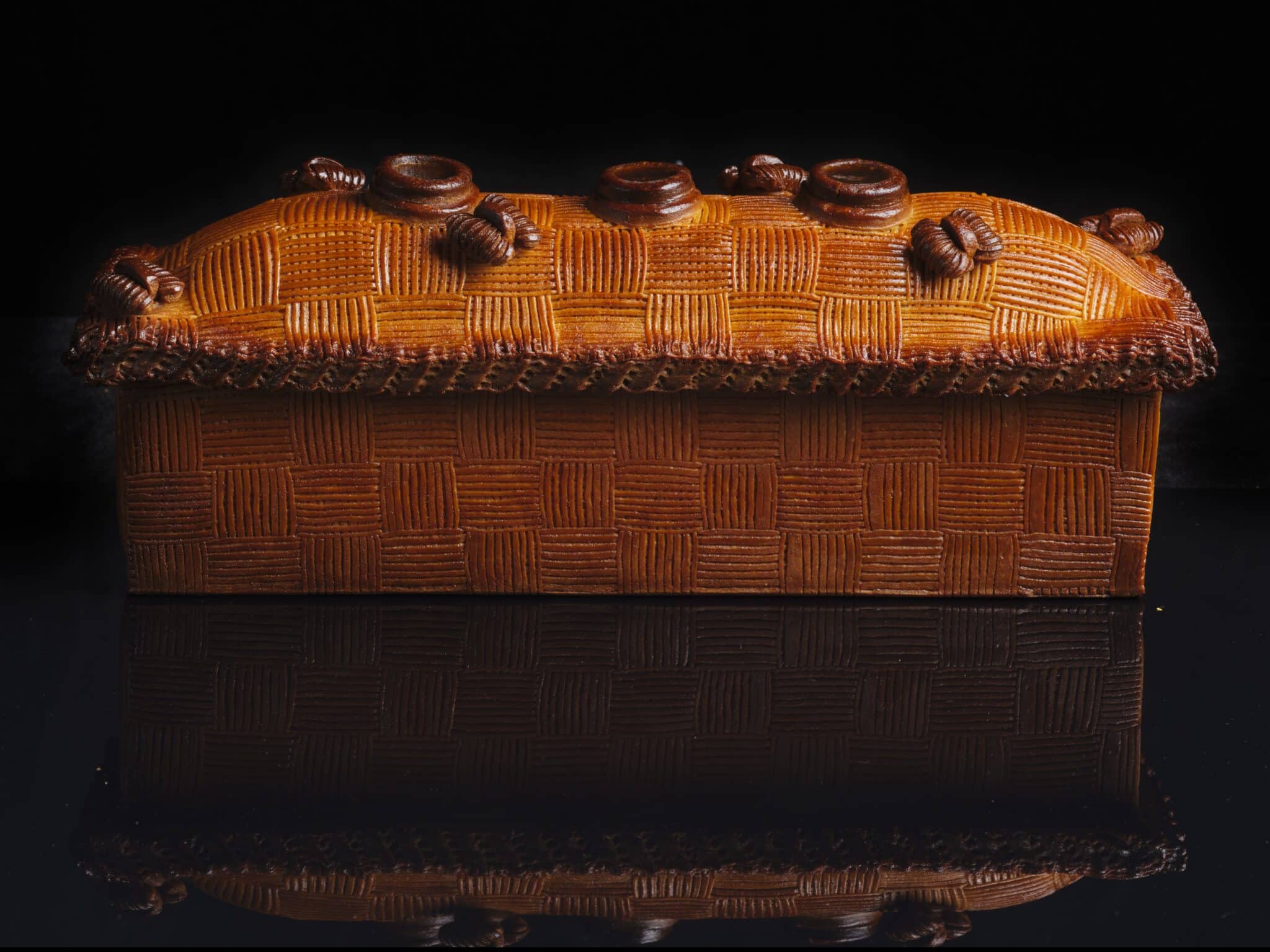
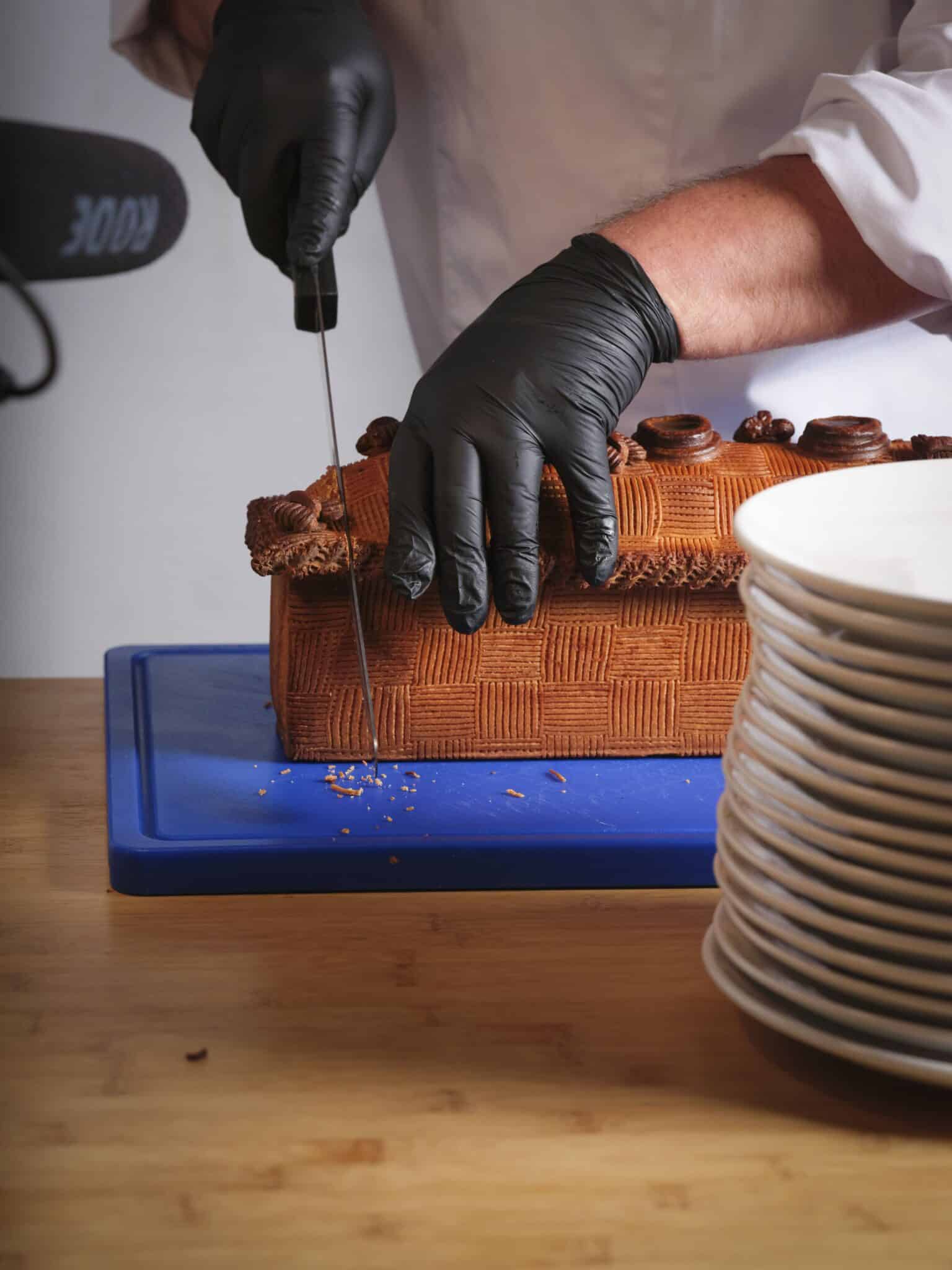
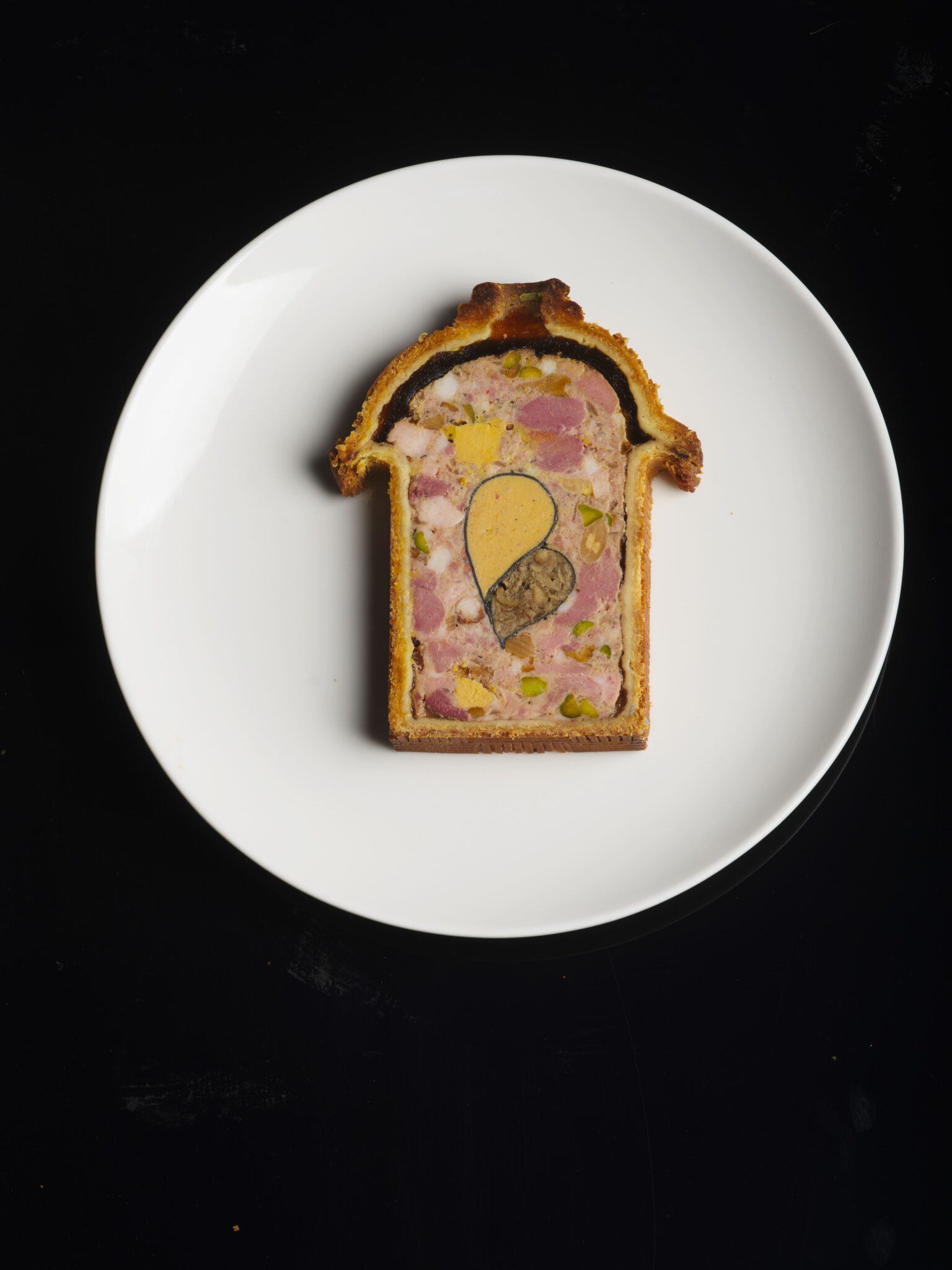
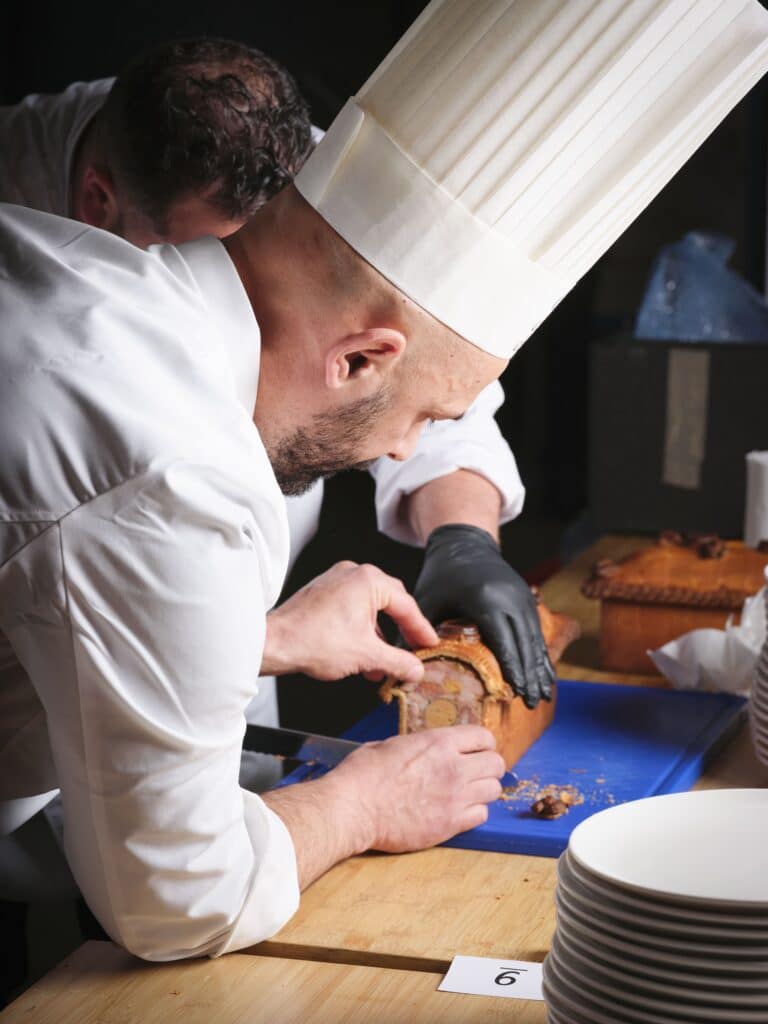
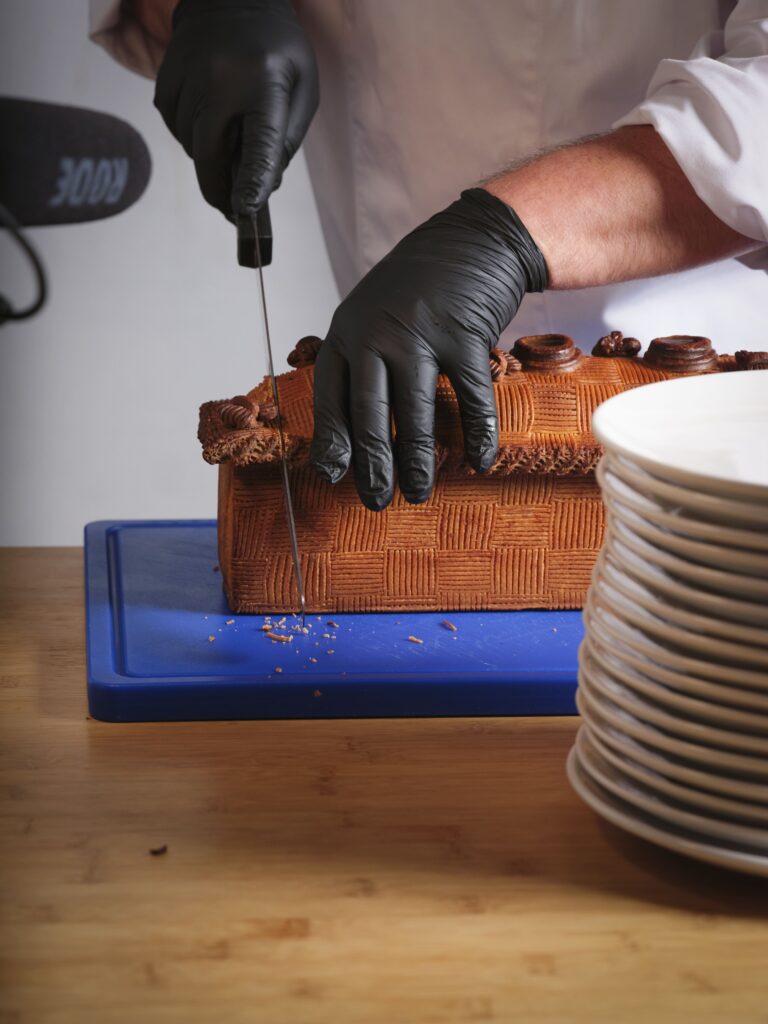
A bold aesthetic. The name refers to the meticulous pastry work, braided like wicker. It’s a risky technical choice: during baking, the braids can warp, shrink, or cook unevenly. Thibault mastered it perfectly, delivering a look that is both rustic and exquisitely refined.
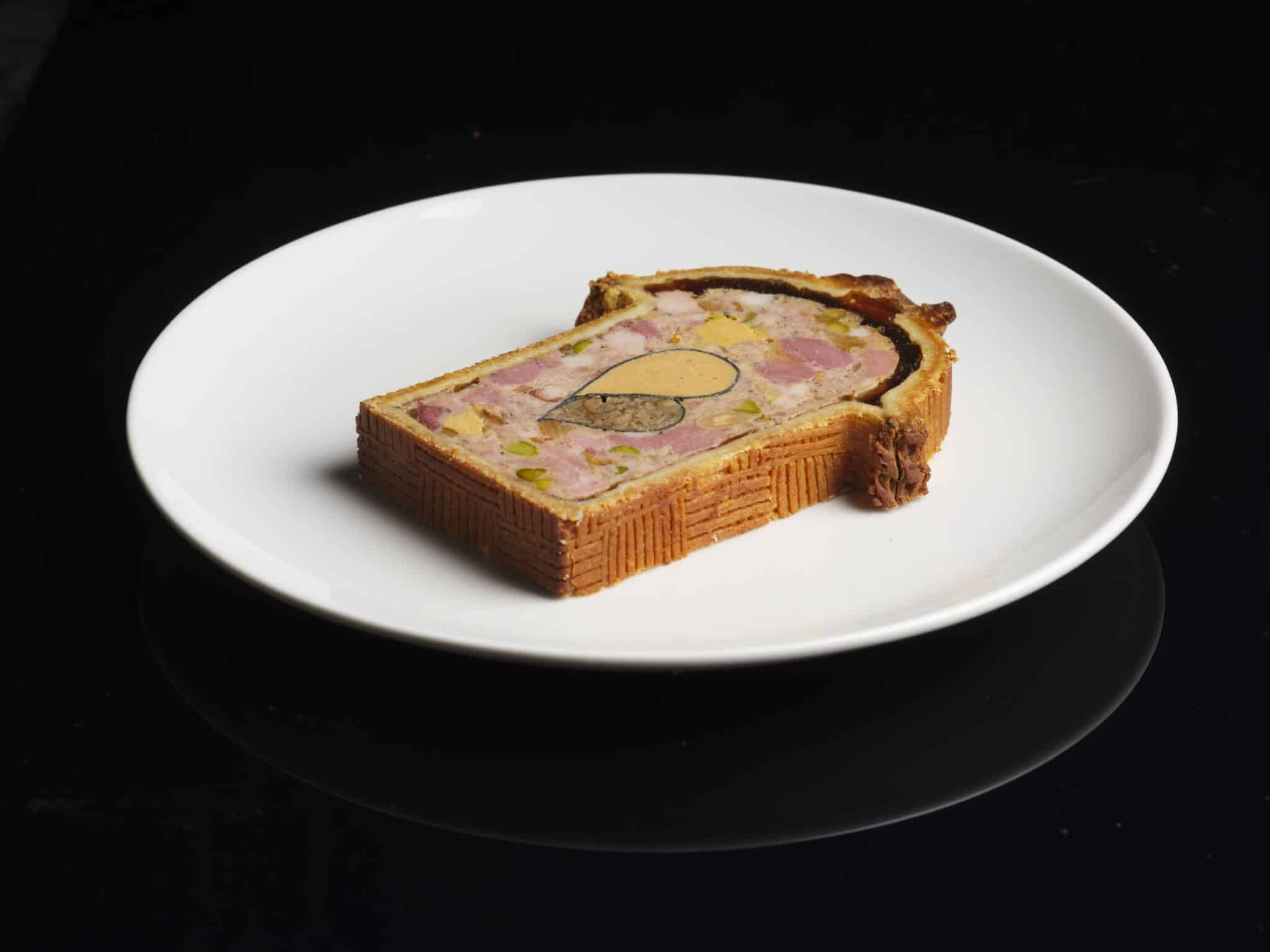
A filling with identity: the Catalan charcutier (already 2022 World Champion of Catalan Sausage) played his terroir card without compromise, refusing gimmicks and focusing on the nobility of the ingredients:
Kintoa pork (Basque Country): chosen for its intramuscular fat that enriches the meat.
Free-range duck and Landes foie gras: for aromatic power and melt-in-the-mouth richness.
Sweetbreads: for a silky texture and a touch of elegance.
“Like a musician, I found the right score, and it hit the mark,” he explains nicely. He didn’t try to imitate the Japanese or the Parisians; he played his own music—the music of Southwest France.
4. A historic double :when technique meets emotion
It’s the statistical anomaly of this 16th edition: Thibault Gonzales pulled off the double—World Champion (technical jury) and Confrérie Prize (the epicureans’ jury).
Usually, these two awards reflect two different philosophies: cold technical perfection on one side, pure indulgence on the other. By winning over MOFs, Michelin-starred chefs, and discerning enthusiasts alike, Thibault Gonzales squared the circle. He proved that a pâté en croûte can be mathematically perfect while still deeply moving.
His secret? It comes down to a few simple words:
“Love and passion. I think that if you put your heart into the work, the emotion is passed directly into the pâté en croûte.”
His tears on the podium weren’t staged; they were the emotional release of an artisan who had put his professional life on the line—admitting even that after receiving the Confrérie Prize, he didn’t think he could still hope for the world title.
5. The person behind the jacket
Far from the clichés of the untouchable star chef, Thibault Gonzales describes himself as “an anxious person.” Facing the Japanese candidates or the Parisian brigades, he says the atmosphere was warm and friendly—comparing it to a “rugby team going to war.”
But his real opponent was himself.
“The only candidate who scared me was number 9… me! When you’re a perfectionist and unsure about your work, the biggest danger is yourself.”
That humility hits home. It’s a reminder that the Pâté-Croûte World Championship remains, above all, a story of passionate men and women who doubt, work hard, and push beyond their limits.
6. After the win :Thuir in a frenzy
Since December 2, the small town of Thuir has been living to the rhythm of pâté en croûte. L’Espace Gourmand is packed nonstop. Customers sometimes come from far away, forming queues worthy of trendy Parisian bakeries.
“People keep pouring in, and sometimes I feel like I’m the ‘Cédric Grolet of pâté en croûte,’” Thibault jokes, a little overwhelmed by the sudden virality.
Yet he keeps a cool head. “I handle it like an anxious person—I don’t like disappointing people,” he adds. He knows that every slice sold now has to live up to the world title. Immense pressure, yes—but also a fantastic showcase for Occitan craftsmanship and for all the local producers he highlights.
The Tasting Ritual : The Champion’s Tips
If you’re lucky enough to taste the champion’s pâté (or any other artisanal pâté en croûte), here are the golden rules to do it justice, as laid out by Thibault Gonzales himself:
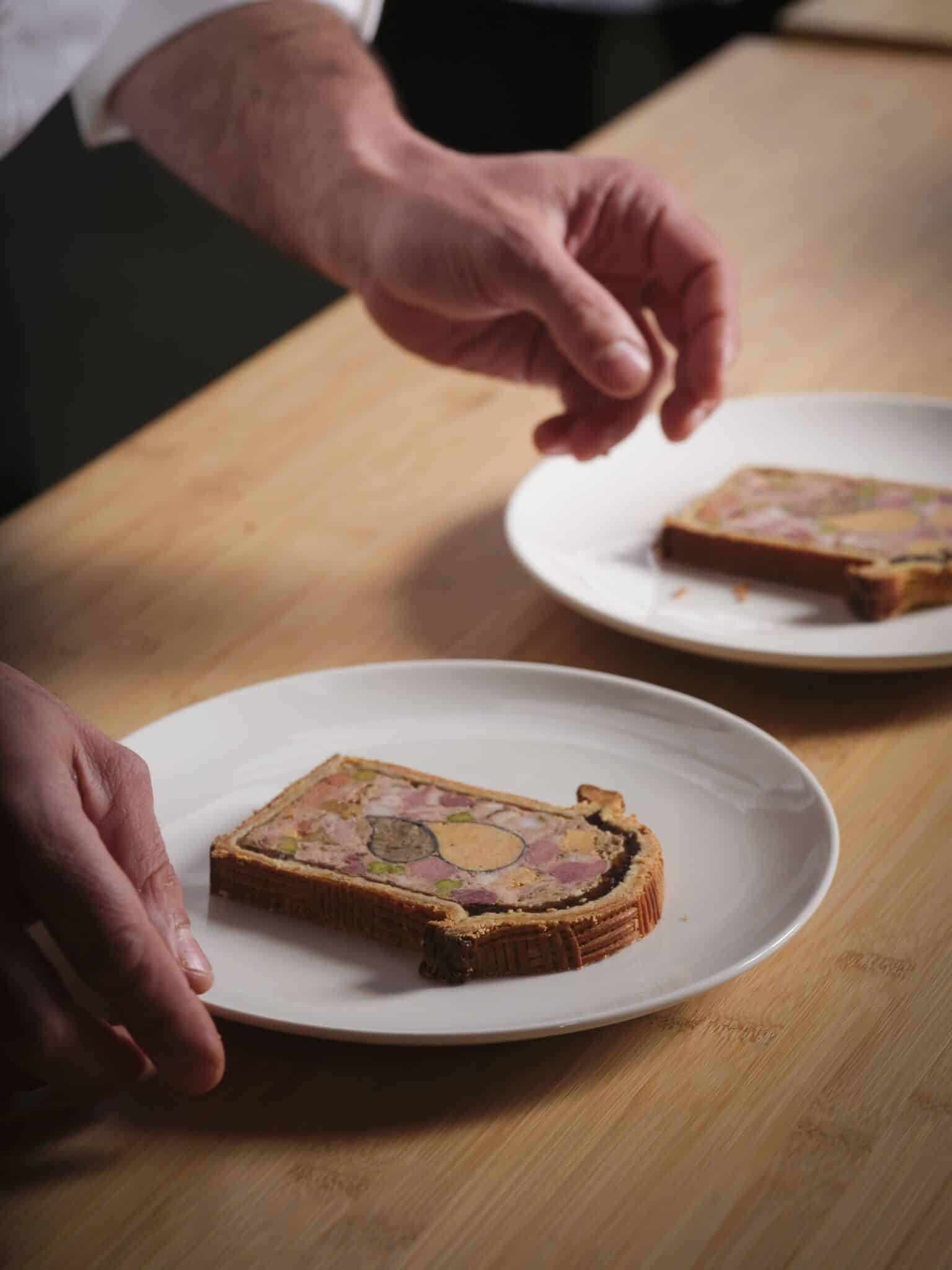
Observation: Take your time. “Observe all the work that went into it.” The pleasure of the eyes sets up the pleasure of the palate.
Temperature: This is the crucial point. “Leave it for about half an hour at room temperature” before serving. The cold of the refrigerator solidifies the fat and dulls the aromas. The aspic needs to soften to reveal its texture.
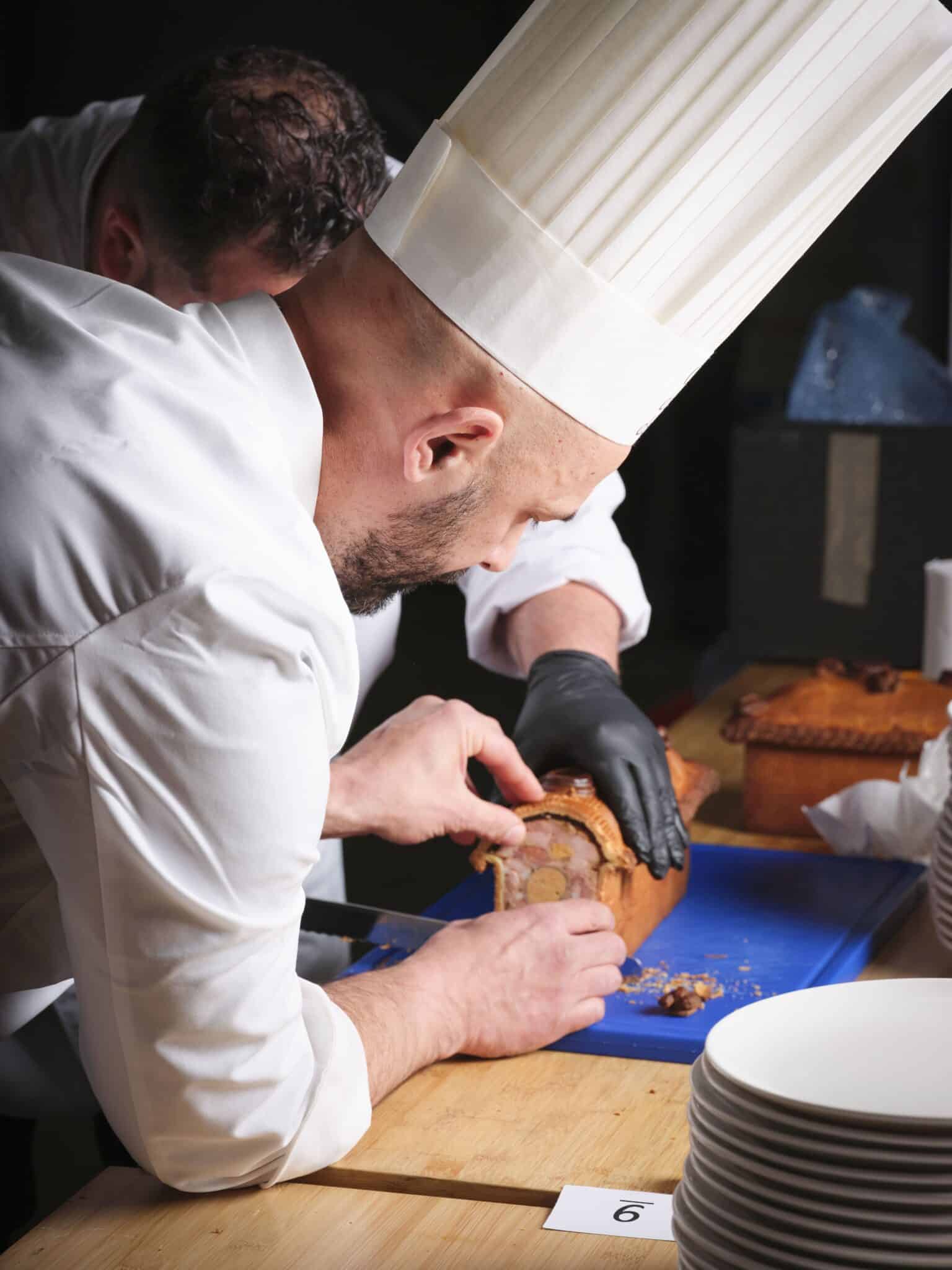
Slicing: No hesitation! “Slice it like a Yule log, from end to end.” It’s essential to have the full mosaic (crust, aspic, fillings, and inclusions) in each slice to discover “what’s hidden inside.”
The entire World Championship team congratulates Thibault Gonzales on this exemplary journey that shines a spotlight on French craftsmanship!
2025 Awards Summary
- World Champion: Thibault GONZALES (Espace Gourmand, Thuir – France)
- 2nd Place: Jonathan DUDEK (Charcuterie Arnaud Nicolas, Paris – France)
- 3rd Place: Seigo ISHIMOTO (Restaurant Le Cœur, Japan)
- Confrérie Prize: Thibault GONZALES
- Elegance Prize: Nicolas DELAROQUE (Maison Nico, San Francisco)
- Richelieu Prize: Emeline AUBRY (In Pâté-Croûte We Crust, France)
- Best Newcomer Prize: Arthur DEHAINE (Daniel Boulud, New York)
- Terroirs Prize: Sho ITO (Dominique Bouchet, Tokyo)